


15 Jul 2026 The Steel in Your Slab is Not Optional
Why residential builders need to protect the integrity of reinforced concrete slabs.
Every home starts with trust. The homeowner trusts the builder. The builder trusts the engineer’s drawings. The engineer trusts that the specified materials will be installed correctly. And the entire structure trusts the reinforced concrete slab beneath it.
For residential builders, the concrete slab is one of the most important elements in the home. It supports the loads above it, transfers those loads into the ground, and helps the building perform over time. A good slab is rarely noticed. A poor slab can lead to cracking, movement, costly repairs and disputes that no builder wants.
That is why the steel reinforcement specified in the slab matters.
Steel mesh is not an optional extra. It is not something to be reduced, substituted or removed once inspection is complete. It is a critical part of the reinforced concrete system. If the engineering drawings specify a particular mesh size, that is the mesh required for the job.
One SRIA member explains it simply: “Reinforcing steel is like the skeleton in the body. Without the skeleton, the body has no strength or structure. In the same way, without the correct reinforcement, concrete is far more vulnerable to cracking, movement and failure”.
Concrete is strong, but it has a weakness
Concrete is excellent in compression. This means it performs well when loads press down on it. That is one reason concrete is used so widely in slabs, footings and pavements.
But concrete is comparatively weak in tension. Tension occurs when a material is pulled, bent or stretched. In a residential slab, tension can be created by ground movement, shrinkage, temperature change, point loads, poor compaction, tree roots, moisture variation and normal building loads.
Steel reinforcement helps concrete manage these forces.
The mesh does not stop every crack from forming. Concrete can still crack. However, correctly specified and correctly placed mesh does help control cracking to meet acceptable widths, distribute stress and hold the slab together so it performs as the engineer intended.
In simple terms, concrete provides the size, shape and compressive strength. Steel mesh provides tensile strength and crack control. Together, they form reinforced concrete.
If you remove the steel, reduce the steel or use non-conforming steel, then the slab is no longer what was designed.
Follow the drawings. They are not a suggestion.
Engineering drawings are prepared for a reason. The mesh type, bar size, spacing, lap length, placement and cover requirements all form part of the design.
If the drawing specifies SL82 mesh, using SL72 mesh is not a harmless change. If trench mesh is specified for a footing, using a smaller size to save money can compromise the design. If reinforcement is taken out after inspection and concrete is placed without it, the slab no longer matches the approved design.
These shortcuts may save a small amount of money during construction, but they can transfer significant risk and cost to the homeowner, the builder and the wider industry.
The homeowner may not see the reinforcement once the concrete is poured. That makes the builder’s responsibility even greater. The quality of the slab depends on what happens before the pour, not after the concrete truck arrives.
Good builders protect themselves by ensuring the reinforcement on site matches the engineering drawings before concrete is placed.
Compliance matters as much as size
Using the correct mesh size is only part of the story. Builders also need confidence that the steel reinforcement supplied to site conforms to the relevant Australian Standards.
Steel reinforcement used in concrete must conform to AS/NZS 4671, Steel for the reinforcement of concrete.
The challenge is that non-conforming mesh can be difficult to identify by eye. Two sheets of mesh may look similar on site, but their mechanical properties, ductility, weld shear strength and manufacturing quality may not be the same.
That is why SRIA recommends builders source bar and mesh from SRIA member companies that hold current JASANZ accredited third-party processor certification.
A third-party processor certificate provides independent assurance that the reinforcing steel supplied to site conforms to Australian Standards after it has been cut, bent, welded or straightened.
This matters because steel reinforcement can change during processing. Mesh is made by welding bars together. Smaller diameter bars are often supplied from coil before being straightened, cut and bent. Once that processing occurs, a third-party processor certificate is required.
For builders, the message is simple. Ask for a third-party processor certificate before concrete is placed.
Three checks before every slab pour
Before concrete is poured, builders should be able to answer three basic questions.
First, does the reinforcement match the engineering drawings?
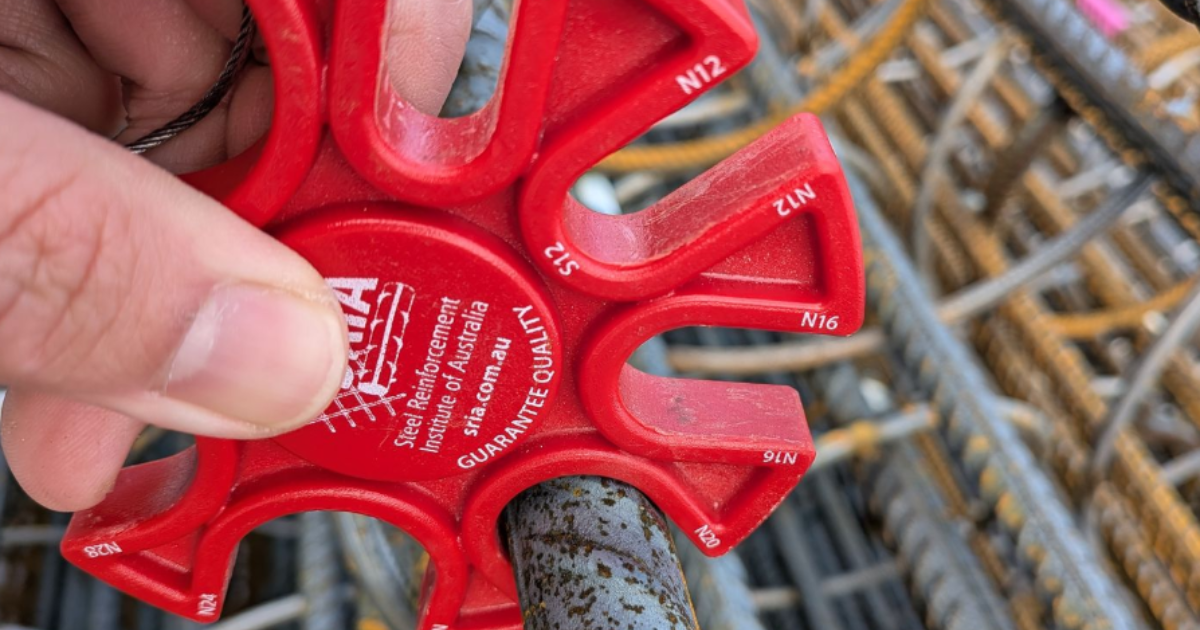
Check the mesh designation, trench mesh size, bar diameter, spacing, and that the mesh is overlapped by two cross bars when placed. Make sure the correct reinforcement is in the correct location. The SRIA provides a tool to help you measure mesh and bar sizes.
Second, is the reinforcement compliant?
Ask your supplier for JASANZ accredited third-party processor certification to verify conformance with ASNZS 4671.
Third, is the reinforcement correctly supported?
Mesh must be placed at the correct height within the slab. If it is sitting on the ground, pushed down during the pour, or not supported by suitable bar chairs, it will not perform as intended.
The reinforcement must be in the right place, not just somewhere in the concrete. Ensure the concreter is aware of these requirements before procurement.
The cost of doing it properly is small compared with the risk
Steel mesh is a relatively small part of the total cost of building a home. But its role in the slab is significant.
Reducing mesh size, using non-conforming mesh or removing reinforcement altogether creates unnecessary risk. It can contribute to cracking, slab movement, reduced durability, costly rectification and reputational damage.
For professional builders, quality reinforcement is not just a compliance issue. It is a trust issue.
Homeowners may never see the steel inside their slab, but they rely on it every day.