TOOLS TO HELP YOU BUILD USING STEEL REINFORCEMENT

TECHNICAL PUBLICATIONS

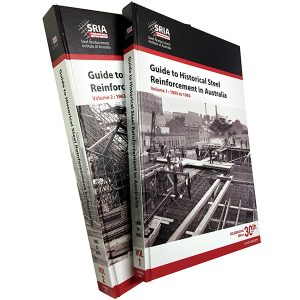
thmb-historical-book
Guide to Historical Steel Reinforcement in Australia
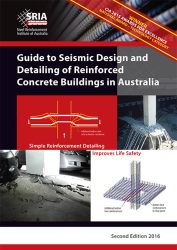
Guide to Seismic Design and Detailing of Reinforced Concrete Buildings in Australia
Z6 Steel Reinforcement Detailing Handbook

Published and sold by the Concrete Institute of Australia, in hard copy and PDF.

TECHNICAL NOTES

Technical Note 1 – Surface Condition of Steel Reinforcement
Technical Note 2 – Use of Ductility Class N and L Reinforcement in Residential Slabs and Footings
Technical Note 3 – Bar Chairs for Support of Reinforcement
Technical Note 4 – Fabrication and Site Handling of Reinforcing Bars
Technical Note 5 – Guidelines for Economical Assembly of Reinforcement
Technical Note 6 – Design of Suspended Concrete Slabs Reinforced with Mesh to AS 3600
Technical Note 7 – Stress Development and Lap Splicing of Straight D500N Tensile Reinforcing Bars to AS 3600:2009
Technical Note 8 – Structural Integrity Reinforcement for Slabs
Technical Note 9 – Fitments
Techncial Note 10 – Mechanical Splices for Joining Reinforcement

CONSTRUCTION TIPS AND ALERTS

INDUSTRY WARNING: Imported NON-COMPLIANT steel mesh is being sold to unsuspecting customers
Ask the Question: Who supplied the REO?
How to Conserve Concrete Buildings
Protect Yourself: Insert this Specification on your Drawings
Avoid These Common Mistakes when Working with Rebar on Site
10 Steps to Build a Reinforced Concrete Slab-On-Ground
Why Concrete Framing – TEN GOOD REASONS why CONCRETE is the preferred material for most building frames.
Don’t Break the REO Quality Chain – Couplers
Structural Integrity Reinforcement
Bending Reinforcement On Site
Common Questions Regarding Reinforcement
The Safe Use of Class L Reinforcing Mesh in Suspended Floors

CONFERENCE PAPERS AND PRESENTATIONS

Engineers Australia – AS 2870 Design and Detailing seminar. 26 August 2025. 
CONCRETE 2025 – Key Focus Areas to Achieve Resilient and Sustainable Concrete Structures
fib 2024 – Key Focus Areas to Assure the Longevity of Resilient and Sustainable Concrete Structures in Australia
CONCRETE 2023 – Design and Detailing for Resilience and Sustainability of Concrete Structures
ASEC 2022 – Critical Reinforcement Design and Detailing for Resilience and Preservation of Concrete Structures
CONCRETE 2021 – Don’t Break the Reo Quality Chain
CONCRETE 2019 – Guide to Historical Steel Reinforcement in Australia
CONCRETE 2017 – Control of Random Cracking in Concrete Residential Pavements
SRIA 2017 Industry Update: Reinforcement Quality Issues
RAFT SLAB DESIGN AND DETAILING – VICTORIAN STRUCTURAL BRANCH COMMITTEE OF ENGINEERS AUSTRALIA 2016
ASEC 2016 – Role of Engineers in Seismic Design and Detailing of Reinforced Concrete Buildings in Australia
CONCRETE 2015 – A Guide to Seismic Design and Detailing of Reinforced Concrete Buildings in Australia
ASEC 2016 – Role of Engineers in Seismic Design and Detailing of Reinforced Concrete Buildings in Australia
LOAD MORE
CONCRETE 2013 – Recent Developments in the Design and Construction of Concrete Structures incorporating Low-Ductility Steel Reinforcement
ASEC 2012 – Class L Mesh Elevated Slab Tests
Part 1A – Obectives, Design & Details
ASEC 2012 – Class L Mesh Elevated Slab Tests
Part 1B – Observations & Results
ASEC 2012 – Class L Mesh Elevated Slab Tests
Part 2A – Strength Design to Concrete Structures Standard AS 3600–2009
ASEC 2012 – Class L Mesh Elevated Slab Tests
Part 2B – Comparison of Design Strengths to AS 3600–2009 with Test Results
CONCRETE 2011 – New Design Rules and Tables for Development and Lap Splice Lengths to AS 3600–2009
CECAR 5 & ASEC 2010
NEW DESIGN TABLES FOR DEVELOPMENT AND LAP SPLICE LENGTHS IN ACCORDANCE WITH AS 3600–2009
CECAR 5 & ASEC 2010
A REVIEW OF RECENT AUSTRALIAN BOND TEST RESULTS AND THE NEW STRESS DEVELOPMENT DESIGN RULES OF AS 3600–2009
CECAR 5 & ASEC 2010
REVIEW OF AUSTRALIAN SUPPORT-SETTLEMENT TESTS ON CONTINUOS, ONE-WAY REINFORCED-CONCRETE SLABS INCORPORATING LOW-DUCTILITY REINFORCEMENT

LECTURES

Why Concrete – A classic lecture by Professor H J Cowan, AO Professor Emeritus of Architectural Science, University of Sydney. Although originally published in 1970, most of its statements are still true today.

RESEARCH

Curtin University – Class L reinforcement mesh in suspended slabs
Building Research Association of New Zealand – Concrete Blade Columns in Fire – (file to be provided)
University of Melbourne – Seismic performance of precast concrete structures – (file to be provided)
University of Adelaide – Performance of reinforced concrete frames with masonry infill panels – (file to be provided)

VIDEOS

CAN'T FIND WHAT YOU ARE LOOKING FOR?

We have an extensive in-house TECHNICAL LIBRARY available to the public by appointment. Contact us to arrange a visit.